Project Overview: SBUEats is an innovative mobile application designed to transform the on-campus dining experience at Stony Brook University. With a focus on enhancing convenience, accessibility, and user satisfaction, SBUEats aims to revolutionize how students, faculty, and visitors interact with dining options on campus. By consolidating various dining functionalities into a single, intuitive platform, SBUEats seeks to streamline menu browsing, ordering, payment, and account management, ultimately improving the overall dining experience for the SBU community.
Team: Mayisha Delwar
Problem Statement: SBUEats aims to address the fragmented and inefficient on-campus dining experience encountered by members of the Stony Brook University community. Specifically, the project targets challenges related to accessing up-to-date dining information, navigating multiple dining applications, and managing dining-related tasks effectively. By consolidating dining functionalities of the Nutrislice and GET Mobile apps into a single, user-centric platform, SBUEats aims to streamline menu browsing, ordering, payment, and account management processes. Through this targeted approach, SBUEats seeks to enhance accessibility, convenience, and overall satisfaction for students, faculty, and visitors, thus transforming the on-campus dining landscape at Stony Brook University.
UX Design Process:
Empathize
Define
Ideate
Prototype
Test
Empathize
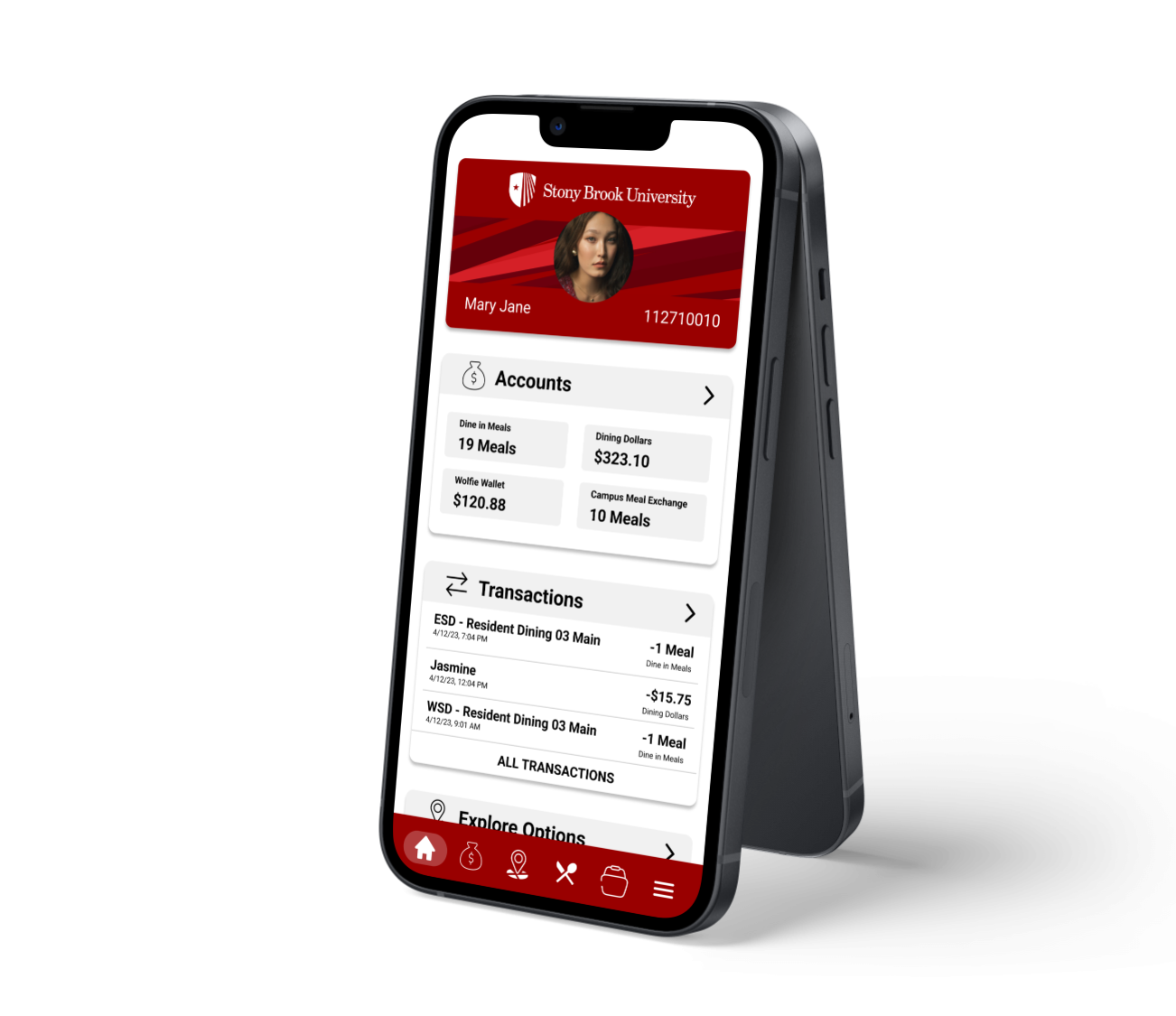
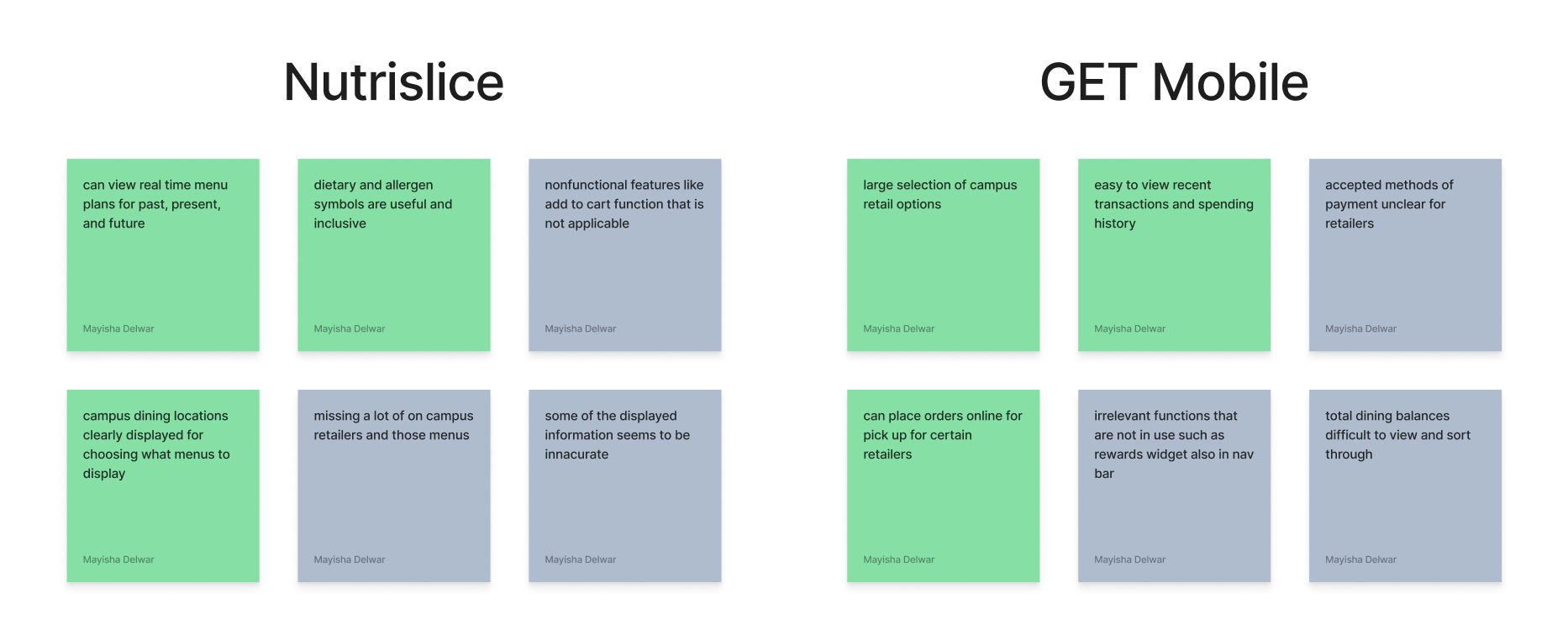
The Empathize phase began with a thorough exploration of the current landscape of on-campus dining applications at Stony Brook University, focusing on existing platforms such as Nutrislice and the GET Mobile app. The analysis revealed significant shortcomings in these apps, including fragmented user experiences and limitations in providing accurate and up-to-date dining information.
Initial Research Process
I conducted an in-depth analysis of Nutrislice and the GET Mobile app to understand their functionalities, user interfaces, and effectiveness in meeting the dining needs of the SBU community. This exploration highlighted the challenges faced by students, faculty, and visitors in accessing dining information, placing orders, and managing dining accounts efficiently.
User Personas
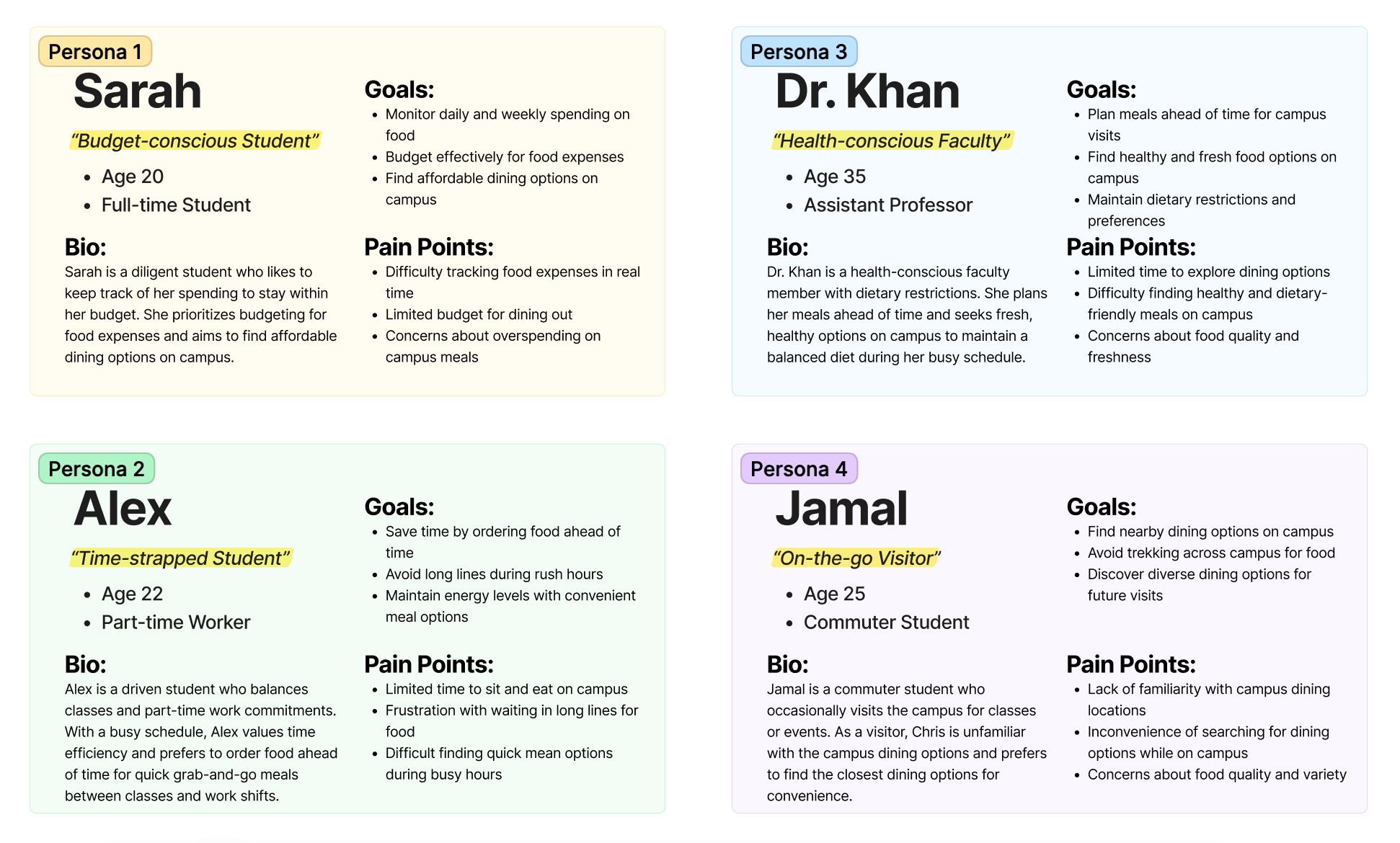
Drawing from my research insights, I developed user personas to represent the diverse needs and preferences of the SBU community. These personas provided valuable insights into the specific challenges faced by different user groups, including students balancing budget constraints, faculty with dietary restrictions, and visitors seeking convenient dining options on campus.
Define
In the Define phase, I synthesized the research findings to understand the shortcomings of existing on-campus dining applications at Stony Brook University, namely Nutrislice and the GET Mobile app. While these apps have provided valuable information about dining options, they present fragmented user experiences and fail to meet the needs of the SBU community effectively. By defining the target audience and refining the problem statement, I was able to effectively guide the design process to address the identified needs and pain points.
Target Audience
The target audience encompasses students, faculty, and visitors at Stony Brook University who seek a consolidated, efficient, and user-friendly solution for accessing dining information, placing orders, and managing dining accounts.
Key questions to aid in creating our problem statement:
How can we improve accessibility to dining information and options for students with dietary restrictions?
What features would facilitate efficient and convenient dining experiences for busy faculty members?
How can we enhance the dining experience for visitors to the campus who may be unfamiliar with available options?
How can we address the limitations of existing on-campus dining applications to provide a seamless user experience for the SBU community?
What features and functionalities are essential for a comprehensive and user-friendly dining platform?
How can SBUEats integrate the best features of Nutrislice and the GET Mobile app while overcoming their shortcomings?
Ideate
In the Ideate phase, I unleashed my creativity to generate a wide range of ideas and concepts for SBUEats—a platform designed to revolutionize the on-campus dining experience at Stony Brook University. Drawing inspiration from my research insights and user personas, I explored innovative solutions to address the shortcomings of existing dining applications and enhance the overall dining experience for students, faculty, and visitors.
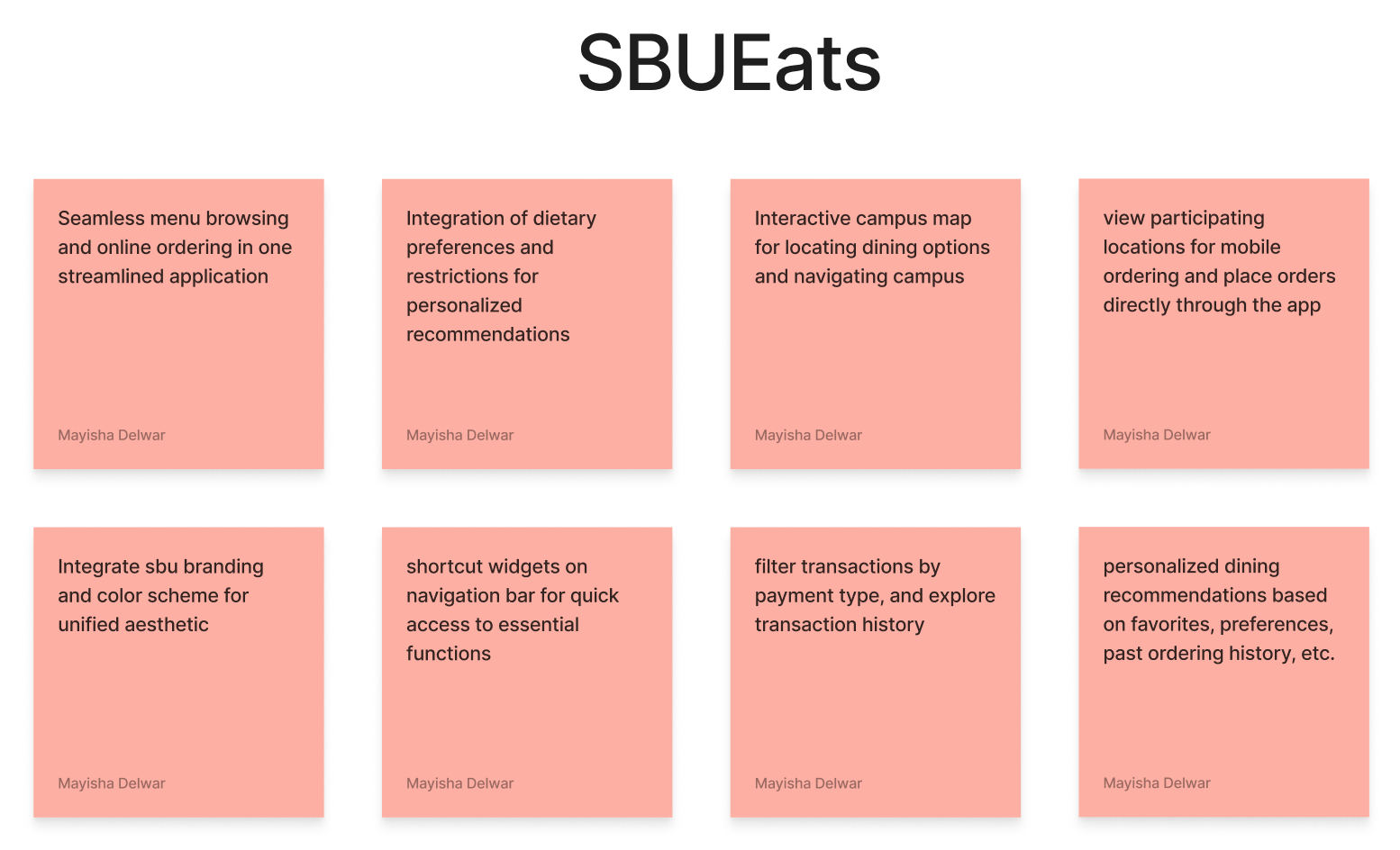
Brainstorming
During brainstorming sessions, I generated ideas for potential features and functionalities that would make SBUEats a comprehensive and user-friendly platform. These ideas include seamless menu browsing, integration of dietary preferences, interactive campus map, mobile ordering, SBU branding, quick access widgets, transaction filtering, personalized dining recommendations, and more.
User Flow Design
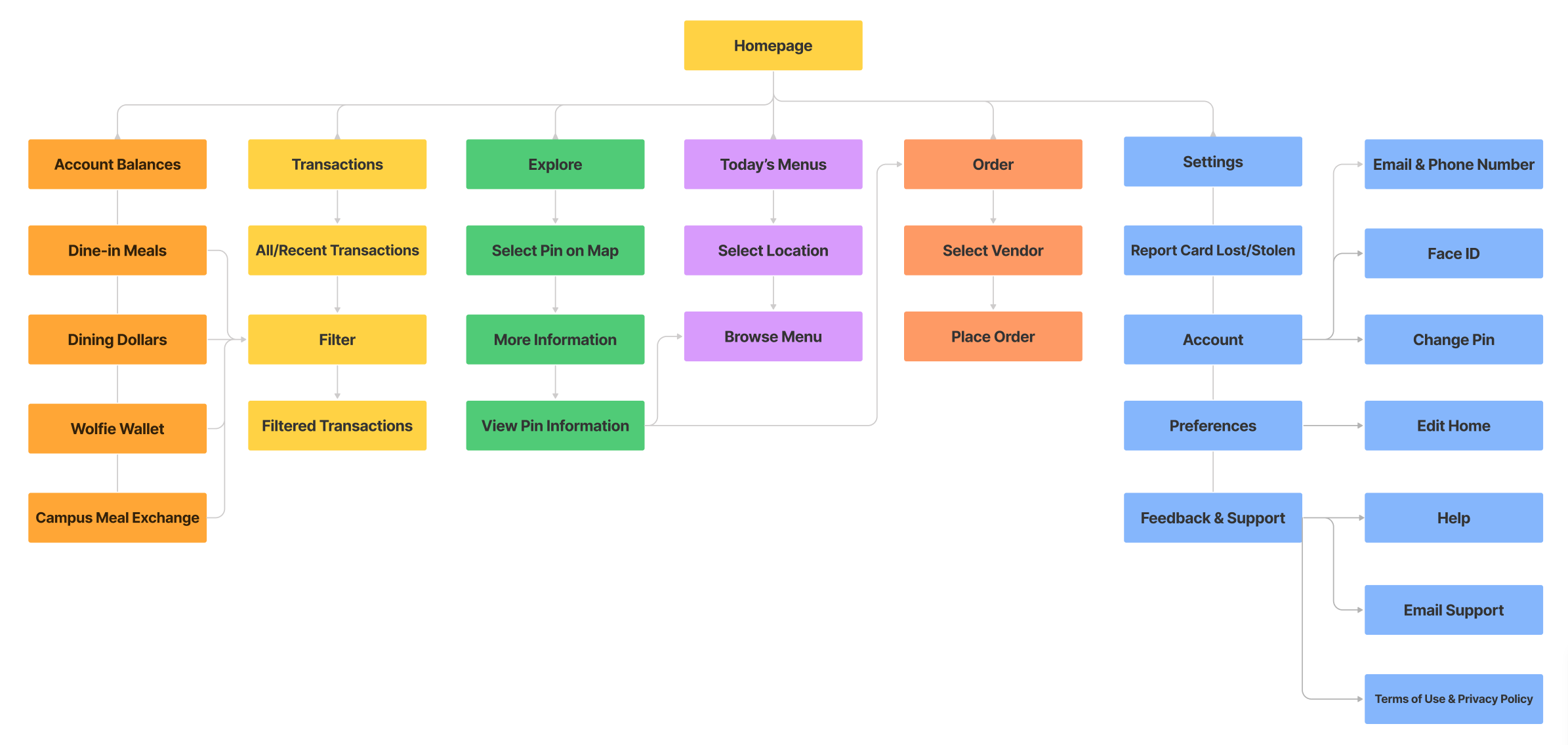
To ensure seamless navigation and user interaction, I crafted a user flow diagram that maps out the main features and functions of SBUEats. This diagram visualizes the user journey and highlights key touchpoints within the app, facilitating efficient navigation without confusion.
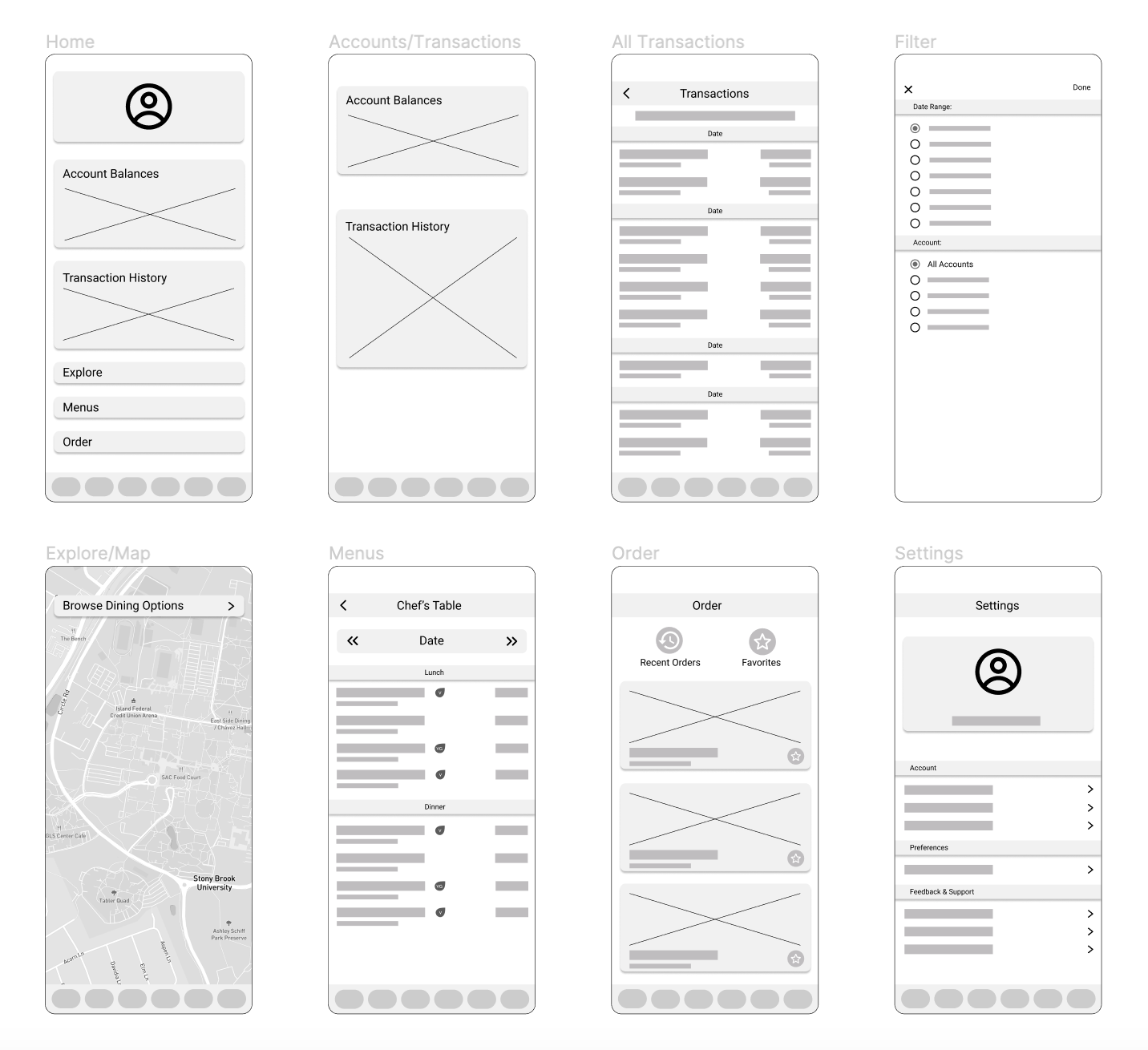
Low Fidelity Wireframes
To further conceptualize the design of SBUEats, I developed low-fidelity wireframes that outline the layout and structure of the app. These wireframes provide a visual representation of the app's interface and help communicate the intended user experience.
Prototype
In the Prototype phase, I translated the ideas and concepts generated during the Ideate phase into tangible designs for SBUEats. Leveraging the insights from user personas, brainstorming sessions, and user flow diagrams, I created both low-fidelity and high-fidelity wireframes to visualize the layout and functionality of the app.
Design Process & Visual Design
During the design process for SBUEats, I followed a user-centered approach, incorporating Gestalt's principles of design and usability heuristics. Feedback from peers at Stony Brook University who regularly use dining apps informed the design decisions and iterative improvements. The aim was to create an intuitive and user-friendly experience by ensuring consistency, visibility, user control, and a minimalist design approach.
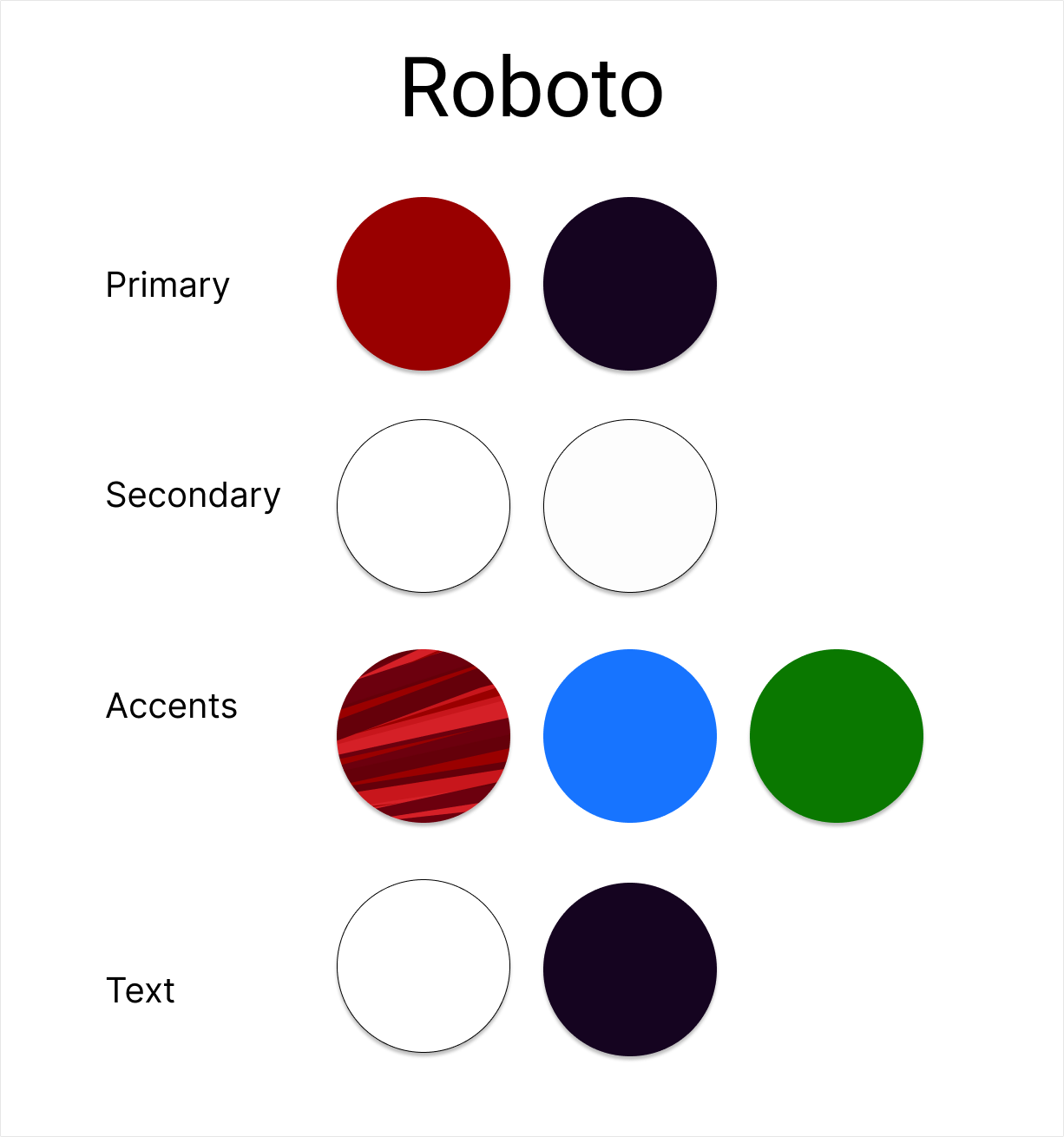
The SBUEats interface is designed with a carefully selected color scheme that aligns with Stony Brook University's branding, emphasizing a visually appealing and cohesive experience. The use of the Roboto font enhances readability, while the application of Gestalt's principles ensures visual organization, allowing users to quickly locate and process information. The interface prioritizes intuitive navigation, minimalistic design, and user-centered principles.
High-Fidelity Wireframes
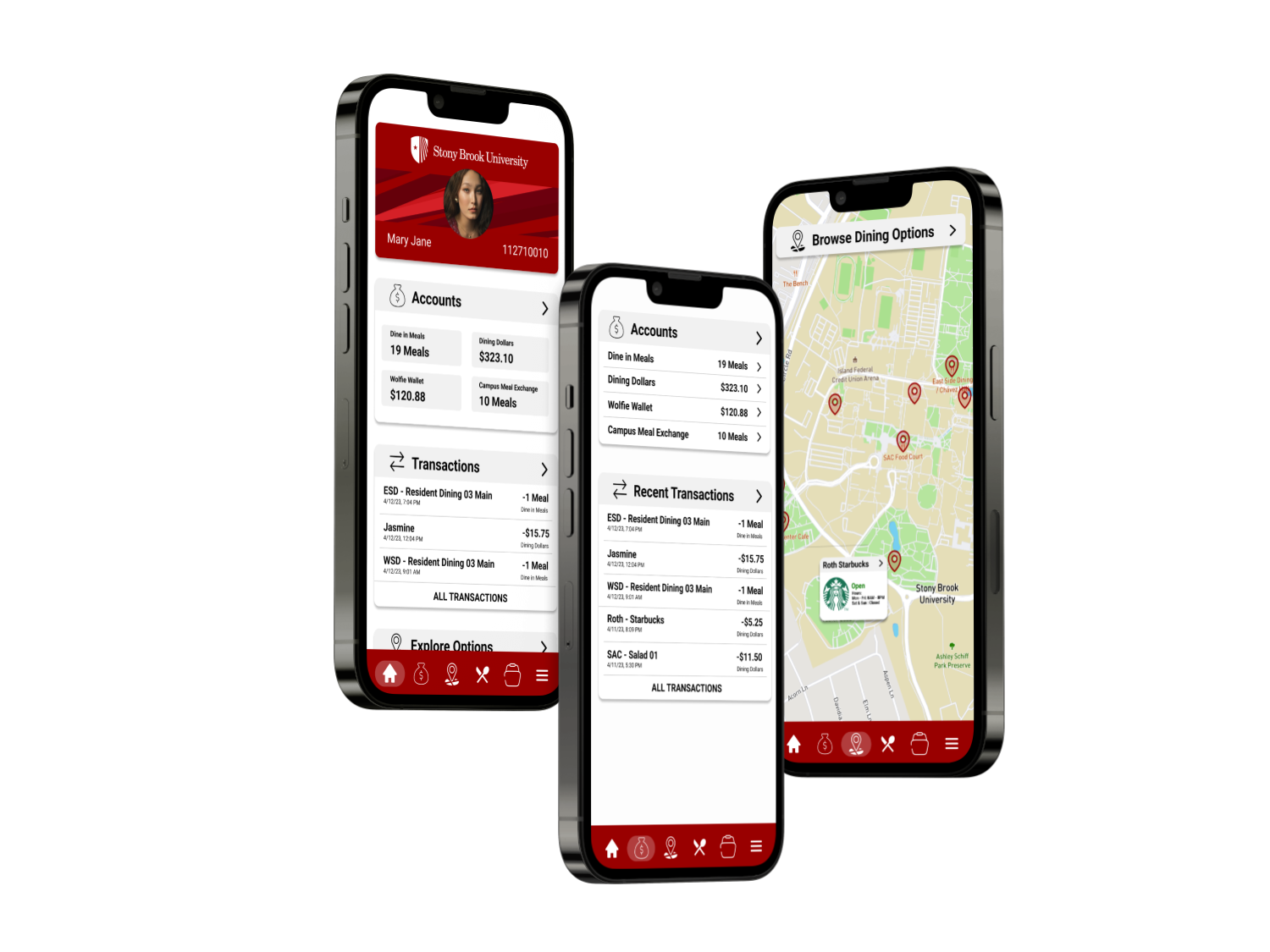
Building upon the low-fidelity wireframes, I created high-fidelity wireframes to refine the visual design and incorporate more detailed elements such as color schemes, typography, and imagery. These wireframes provided a more polished representation of the final app design.
Iterative Design Process
Throughout the Prototype phase, I engaged in an iterative design process, refining the wireframes and prototype based on user feedback and usability testing. This iterative approach ensured that SBUEats met the needs of its users and delivered a seamless and intuitive user experience.
Prototype Walkthrough
Key Features and Solutions
Real-Time Menus: Stay updated with the latest offerings from campus eateries.
Personalized Recommendations: Receive tailored suggestions based on preferences and dietary restrictions.
Effortless Ordering: Easily customize and place orders with just a few taps.
Secure Payment Integration: Complete transactions securely within the app.
Interactive Campus Map: Locate dining options and navigate the campus conveniently.
SBU Branding and Aesthetic: Immerse yourself in the university experience with cohesive branding.
Quick Access Widgets: Access essential functions with ease from the navigation bar.
Transaction Filtering: Track spending and explore transaction history effortlessly.
Consolidated Platform: Enjoy the convenience of accessing all dining-related functionalities in a single app, eliminating the need to switch between multiple applications.